What to Expect From Fire Damage Pros, Step by Step
The fire trucks are gone. The house smells like a campfire, there are holes in the ceiling where firefighters checked for hidden flames and the carpet squishes under your shoes. You are wondering what happens next and who is supposed to do it.
Here is the short answer. A good fire restoration crew secures the house right away, dries out the water, cleans the soot and smoke residue, gets rid of the odor and then rebuilds. The sooner that starts, the more you save, because soot keeps staining and corroding surfaces for days after the flames are out.
Before the crew arrives, do these four things
- Wait for the all-clear. Don’t go back in until the fire department says it is safe.
- Call your insurance company and ask what they need from you first.
- Photograph everything before anything is moved or cleaned.
- Save every receipt, from the hotel to the toothbrush.
You will find things not damaged by the fire may still be ruined by smoke and may be soggy with water used to put out the fire.
U.S. Fire Administration, After the Fire
Pros should work to the IICRC S700 fire and smoke standard
The restoration industry has a written standard for this work. The ANSI/IICRC S700 Standard for Professional Fire and Smoke Damage Restoration was published as a first edition in 2025. It covers how to assess fire residues and odors in a building, its HVAC system and its contents, plus contractor qualifications, documentation and a written restoration work plan.
This standard also describes the practical principles, methods, and processes including equipment, tools, and materials, for the restoration cleaning and fire odor management of buildings and contents.
IICRC, ANSI/IICRC S700
When you interview companies, ask how they document the job and what their work plan looks like. Our guide to choosing the right restoration company has more questions to ask.
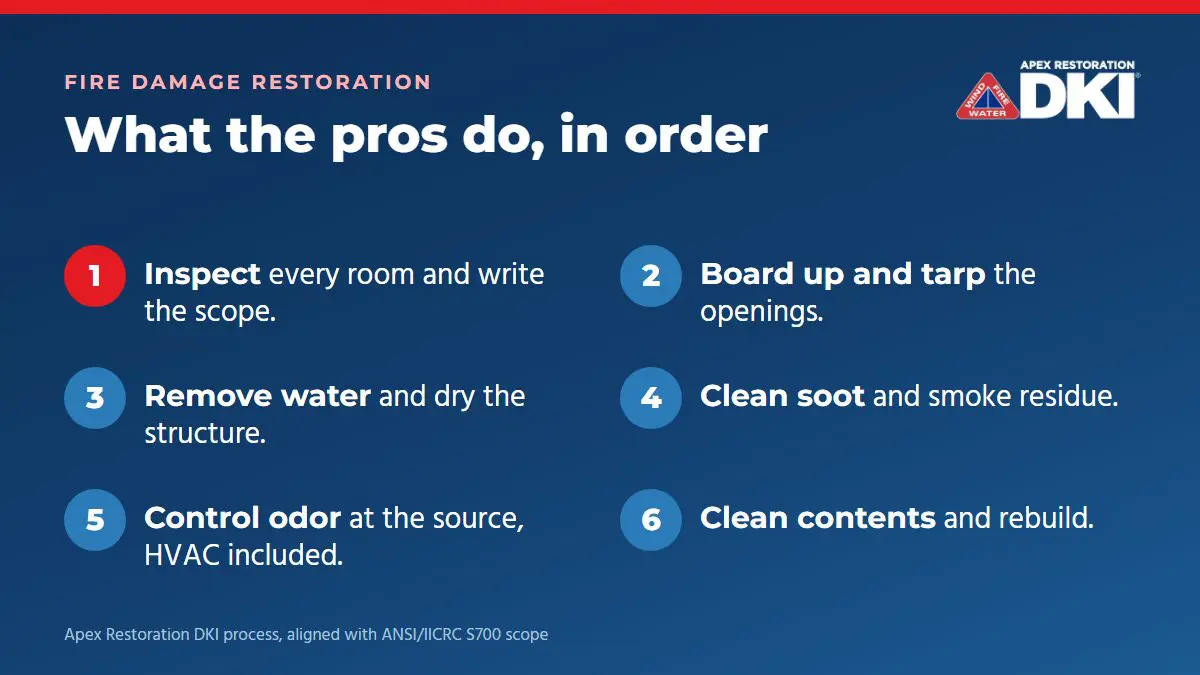
Step 1. Inspection and a written scope.
Technicians walk every room, not just the burned one. Smoke travels through ductwork, attics and wall cavities, so a bedroom down the hall can need as much cleaning as the kitchen. The floor may look fine while the subfloor underneath is charred or soaked. The inspection turns into a written scope your adjuster can review.
Step 2. Board-up and tarping.
To fight the fire, crews often break windows and cut holes in the roof to vent smoke. The U.S. Fire Administration notes you may need to board up windows and doors so no one can get in. We board openings and tarp the roof as part of the emergency response, which keeps out rain, animals and thieves, and shows your insurer you acted to prevent further damage.
Step 3. Water removal and drying.
Most people don’t expect water damage after a fire. Fire hoses and sprinklers leave a lot of water behind, and wet drywall, insulation and subfloor start growing mold if they are left. We extract the standing water and dry the structure with air movers and dehumidifiers, the same way we handle any water damage restoration. Our step-by-step water damage cleanup post explains the drying side, and our mold remediation team steps in if growth has already started.
Step 4. Soot and smoke residue cleaning.
Soot is not just dirt. It is acidic, it smears when you wipe it and different fires leave different residues. Crews test surfaces and match the cleaning method to the residue, then decide what can be cleaned and what has to be replaced. In homes built before 1978, which the EPA says are more likely to have lead-based paint, Apex Restoration DKI follows lead-safe work practices. We are Lead-Safe Certified.
Step 5. Odor control.
Smoke odor hides in insulation, ductwork and furniture, which is why air freshener and open windows don’t fix it. Odor control means removing the source first, cleaning the HVAC system and then using professional deodorization to neutralize what is left. Our post on the hidden dangers of smoke and fire damage goes deeper on why this step matters for your health.
Step 6. Contents cleaning, pack-out and rebuild.
Bedding, furniture, electronics, photos and keepsakes that were smoked but not burned can often be cleaned. When a house needs heavy work, we pack out contents, clean and store them, and bring them back when the rebuild is done. The rebuild itself ranges from paint and carpet to framing, roofing and electrical.
Who pays: talk to your insurer before you sign anything
The Insurance Information Institute says a standard homeowners policy pays to repair or rebuild a home damaged by fire, and additional living expenses coverage helps with hotel bills and meals while the home is being rebuilt. That coverage has limits, and some policies cap it by time, so ask your agent for the numbers.
The USFA also suggests you ask your insurer who pays for cleaning and get a written cost estimate from any company you hire. One honest point: the adjuster works for the insurance company. Apex works for you, and we bill your insurer directly so the paperwork doesn’t land on your kitchen table.
Call Apex while the soot is still fresh
Every day soot sits, more surfaces stain and more metal corrodes. Our fire damage restoration crews work from offices in Tennessee, Alabama, Georgia, Colorado and Texas, including the Chattanooga Valley from our Rossville, GA location.
If the fire department has cleared your house, the next call is us. Apex Restoration DKI answers 24/7, and a real person picks up, not voicemail. We bill your insurance company directly, so you are not stuck fronting the cost while the claim works itself out. Call (931) 434-0877 or request help from our contact page.