How to Put Out Common House Fires (and When to Get Out)
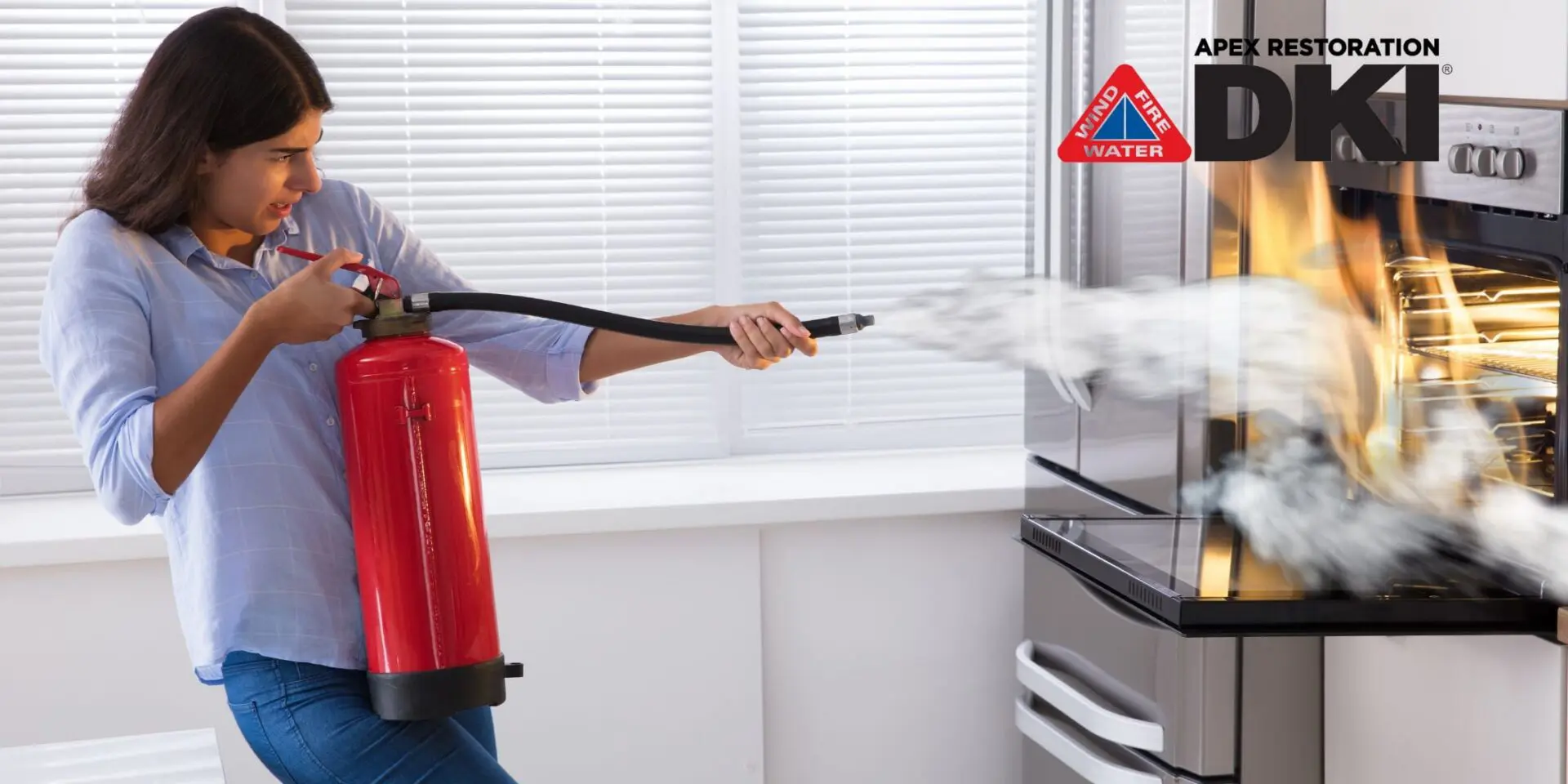
The pan on the back burner flares up. The smoke alarm is screaming, the kids are yelling and you have a few seconds to decide what to do. Here is the single most important thing to know before you read another word: get everyone out and call 911 first. Fight a fire only when it is tiny, contained and you have a clear way out behind you.
That is not us being dramatic. Ready.gov warns that a fire can become life-threatening in just two minutes. Every tip below assumes you have already decided the fire is small enough to handle. If you are not sure, it isn’t.
What to do the moment a fire starts
- Shout “Fire” and get everyone moving. People first, property never.
- Get out and call 911 from outside, on a cell phone or a neighbor’s phone.
- Only fight it if it is small and contained to one pan, one wastebasket or one small object, and your exit is behind you.
- If it grows, stop and leave. Close doors behind you on the way out to slow the smoke.
- Stay out. Never go back in for a pet, a phone or a purse. Tell firefighters who or what is still inside.
Get out and call 911 before you fight anything
House fires are common, and they are deadly. The U.S. Fire Administration estimates there were 344,600 residential building fires in 2023, and they killed 2,890 people. Smoke and toxic gases kill more people than flames do, and smoke moves faster than you think.
Calling 911 early costs you nothing. If you do knock the fire down, the fire department can still check the wall cavity, the vent hood or the attic for heat you can’t see. A fire that looks out is not always out.
Use an extinguisher only when every answer is yes
The U.S. Fire Administration gives a short checklist to run through before you pick up an extinguisher. If any answer is no, you leave.
- Have I alerted others in the building that there is a fire?
- Has someone called the fire department?
- Am I physically able to use a fire extinguisher? (Young children and older adults should not.)
- Is the fire small and contained to one object or surface, like a pan or a wastebasket?
- Am I safe from the fire’s toxic smoke?
- Do I have a clear escape route?

If you’re unsure about whether it is safe to use a fire extinguisher, and for all other situations, alert others, leave the building, and call 911 from a mobile or neighbor’s phone.
U.S. Fire Administration, Fire extinguishers
Remember PASS
If every answer is yes, stand with your back to the exit and use the PASS method: Pull the pin, Aim low at the base of the fire, Squeeze the lever slowly and evenly, and Sweep side to side. Aim at the base, not the flames.
Grease fire on the stove: lid on, burner off, never water
Cooking is the leading cause of home fires. Fire departments responded to an estimated 170,000 home cooking fires in 2021, and the top factor was unattended equipment, at 37 percent, according to the U.S. Fire Administration.
- Turn the burner off. No heat, no fuel for the fire to keep building.
- Slide a lid or a baking sheet over the pan and leave it there until the pan is completely cool. Don’t lift it to peek.
- Never throw water on it. Water hits hot oil, flashes to steam and throws burning grease across the kitchen.
- Don’t carry the pan to the sink or outside. You will spill burning oil on yourself or the floor.
- If the flames climb the cabinets or the hood, get out and call 911.
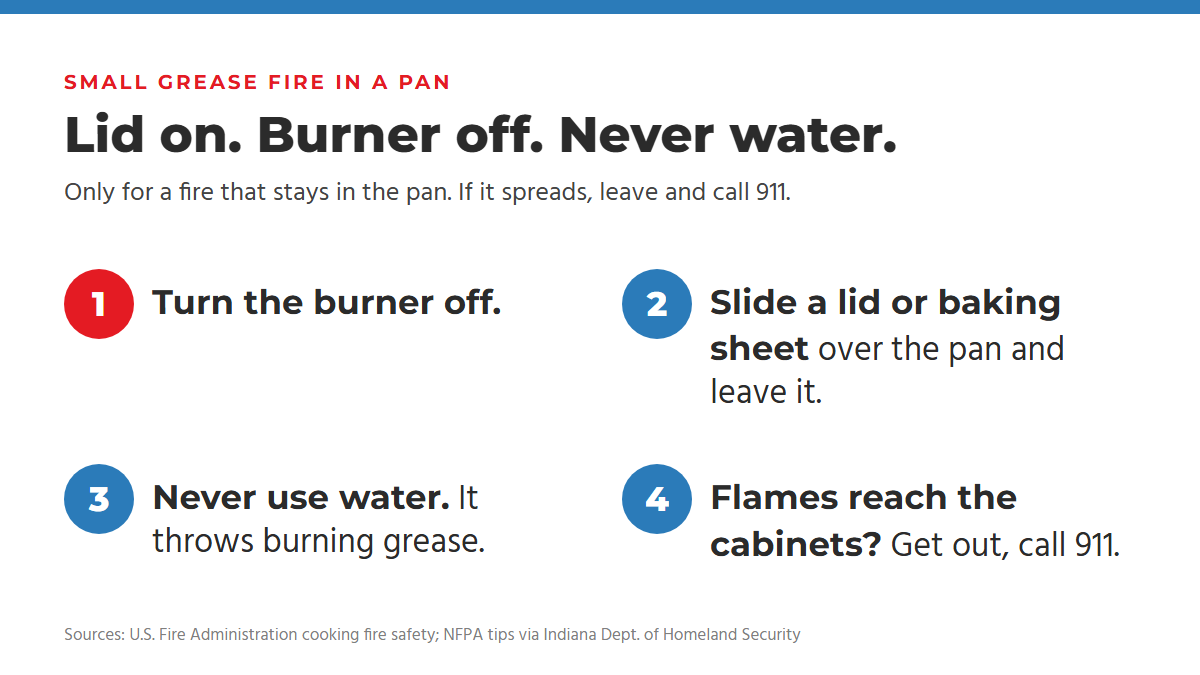
Fire safety officials say the same thing in slightly different words. A cooking safety sheet from the Indiana Department of Homeland Security, citing NFPA, says to never use water on a grease fire and to smother small ones by sliding a lid over the pan and turning off the stovetop.
Oven fire: turn it off and keep the door shut
A fire inside the oven has very little air to work with, so don’t give it more. The U.S. Fire Administration says to turn the oven off and let the contents cool before cleaning. If flames escape the oven, leave your home and call 911.
Electrical fire: no water, and only a Class C extinguisher
Water conducts electricity, so it is off the table for anything plugged in or wired into the wall. Class C extinguishers use an agent that doesn’t conduct electricity, and the multipurpose “ABC” extinguishers sold at most home stores cover Class A through C. If the fire is inside a wall, an outlet or the panel, don’t fight it. Get out and call 911.
Most electrical fires are preventable. The USFA appliance and electrical fire guidance says to plug major appliances straight into a wall outlet, never use an extension cord with a major appliance, don’t overload outlets and replace cords that are cracked or damaged. Light switches that are hot to the touch and lights that flicker need an electrician.
Gas leaks, chimney fires and wood stoves belong to the fire department
The old advice on this page told you to shut gas valves and shovel dirt on wood fires. We are retiring that. If you smell natural gas or propane, or hear a hissing sound, the American Red Cross says to leave immediately, get well away and call the fire department once you are safe. Don’t flip switches or try to find the leak.
A chimney fire or a wood stove that is roaring out of control is the same call. Get everyone out and dial 911. Prevention is your part: have the chimney and stove pipe inspected and cleaned every year, use a screen that covers the whole opening and make sure the fire is completely out before bed.
Put an extinguisher in the kitchen and learn it before you need it
- Buy a multipurpose extinguisher with a UL Listed label, the largest size you can handle comfortably.
- Mount it near the kitchen exit, not over the stove where fire would block it.
- Check the pressure gauge and look for dents or rust regularly.
- Ask your local fire department about hands-on extinguisher training.
- Test smoke alarms monthly and keep one on every level of the home, per the USFA smoke alarm guidance.
- Make and practice a plan to get out. Our guide to creating a home or business fire evacuation plan walks you through it.
Once the fire is out, call Apex before the soot sets in
Even a small kitchen fire leaves smoke residue on cabinets, ceilings and the inside of your HVAC system, plus water from the hoses if the fire department came. Don’t enter until the fire department says it is safe, and don’t turn utilities back on yourself. Then read what to do immediately after fire or smoke damage and our longer guide to the steps that follow fire damage.
Our fire damage restoration crews handle board-up, soot and smoke cleanup, odor removal and rebuilding, from our Knoxville location and every other Apex Restoration DKI office.
A fire in your home is a terrible day, and you don’t have to sort it out alone. Apex Restoration DKI answers 24/7, and a real person picks up, not voicemail. We bill your insurance company directly, so you are not stuck fronting the cost while the claim works itself out. Call (931) 434-0877 or request help from our contact page.