
6 Ways to Teach Your Kids Fire Safety
Ask a 5-year-old what to do if there’s a fire and you might hear “hide under the bed.” That is exactly what scared kids do, and it is exactly what makes them hard for firefighters to find.
The good news is that teaching works. The U.S. Fire Administration reports that in 2020, children 14 and under were 70 percent less likely to die in a fire than the general population, and credits fire education as part of the reason. The one lesson that matters most: when the alarm sounds, get out, stay out and let a grown-up call 911 from outside.
Do these three things with your kids this week
- Push the smoke alarm’s test button so they know the sound and what it means.
- Walk both ways out of their bedroom with them.
- Show them the outside meeting place and have them run to it.
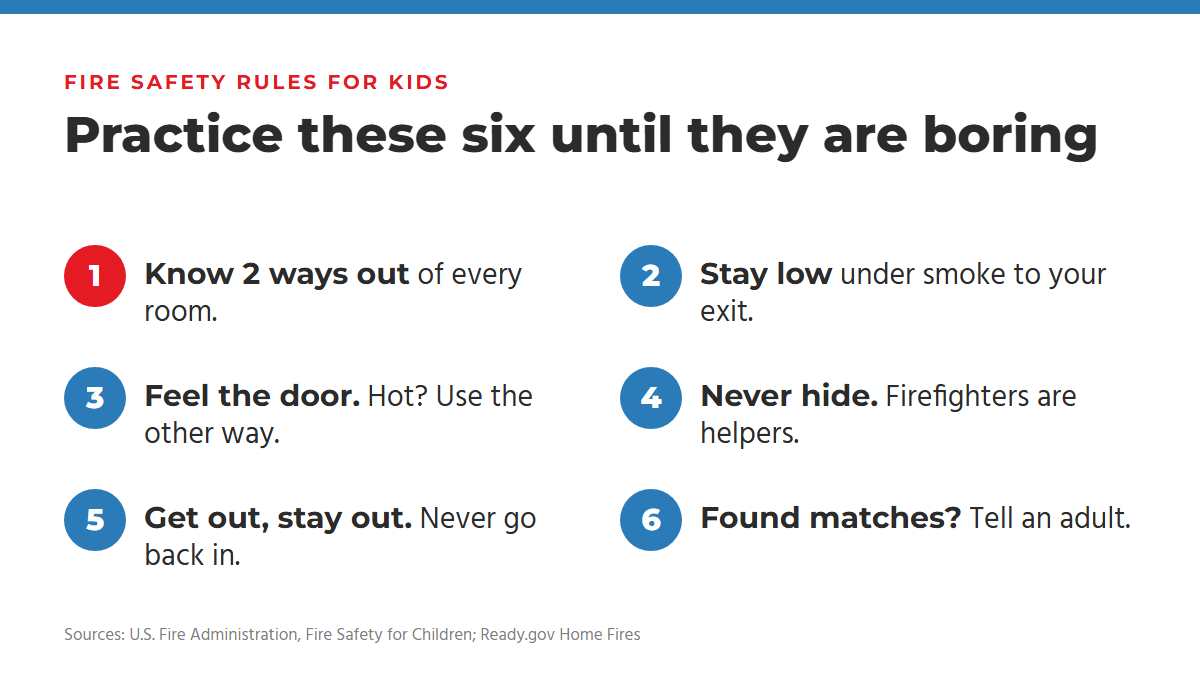
1. Walk the escape route with them, don’t just tell them.
Kids learn by doing. The USFA points out that children may not know how to escape unless an adult shows them. Make it a game the first time: “The alarm is beeping. Show me how you get to the mailbox.” Walk it with them, then let them lead.
Children should know what to do when they hear a smoke alarm and there is no adult around.
U.S. Fire Administration, Fire Safety for Children
Babies and toddlers can’t do this alone. Your family fire evacuation plan should name which adult wakes and carries each young child, plus a backup.
2. Teach two ways out of every room.
Kids should know the door and a second way out of their bedroom, usually a window. Check that their windows open easily and screens pop out quickly. For second-floor bedrooms, decide as adults how a child would get out, and talk with your local fire department about the right option for your home. Keep the second way out simple enough for a scared kid to use in the dark.
3. Practice crawling low and finding the door in the dark.
Smoke rises and heat collects near the ceiling, so the cleanest air is near the floor. Have kids crawl on hands and knees to the door. Ready.gov also suggests practicing feeling your way out with the lights off or eyes closed, since a fire at night means thick, dark smoke.
4. Feel the door before opening it.
Teach them to feel the door and the doorknob before opening it. If either is hot, or smoke is coming around the edges, keep the door closed and use the other way out. If the door is cool, open it slowly and be ready to shut it again.
5. Never hide, and never go back in.
Firefighters in masks and gear can look scary to a little kid. Show your kids pictures or visit a fire station so they know the person in the mask is there to help. Then drill the other half of the rule: once you are out, you stay out, even for a pet or a favorite toy.
Teach children not to hide from firefighters.
Ready.gov, Home Fires
6. Stop, drop and roll only if their clothes catch fire.
Kids sometimes think stop, drop and roll is what you do whenever there’s a fire. It is only for when your clothes are burning. Stop immediately, drop to the ground, cover your face with your hands and roll back and forth until the fire is out. For any burn, cool it under cool water for 3 to 5 minutes and tell an adult right away.
Make fire drills feel like practice, not a scare
Kids remember what they rehearse, and they rehearse best when they are not terrified. Keep it short and matter-of-fact. Tell them a drill is coming the first few times, then try one they don’t expect once they know the route.
- Let them press the smoke alarm test button and start the drill themselves.
- Time each run and see if the family can beat its record.
- Have older kids draw the escape map and tape it inside their bedroom door.
- End every drill at the meeting place with a quick headcount, so it becomes habit.
Keep matches, lighters and hot surfaces out of reach
- Store matches and lighters up high, ideally in a locked cabinet.
- Teach kids that fire is a tool for grown-ups, not a toy. If they find matches or a lighter, they tell an adult.
- Keep kids at least 3 feet from stoves, space heaters and anything else that gets hot.
- Don’t play with lighters in front of them. They copy what you do.
- Read our tips on how to put out common house fires so the adults know when to fight and when to leave.
If a fire does happen, Apex helps your family get home
After a fire, the American Red Cross suggests leaving children with a relative or friend while you first go back into the house, because the site may be unsafe and the damage can upset them. That is a good time to call us. Read what to do immediately after fire or smoke damage, then let our fire damage restoration crew take it from there. Find the Apex office near you on our locations page.
Your kids need you more than the house does right now. Apex Restoration DKI answers 24/7, and a real person picks up, not voicemail. We bill your insurance company directly, so you are not stuck fronting the cost while the claim works itself out. Call (931) 434-0877 or request help from our contact page.